Greenberg Traurig is a sponsor of IP-Con 2023, an annual symposium for the progress of science and useful arts hosted by Oracle and the McCarthy Institute at the Sandra Day O’Connor College of Law.

The proliferation of AI is disrupting the very foundation of IP law by challenging long-held conceptions of what it means


Not necessarily. 

Under the GDPR, controllers are required to provide information relating to what personal data they process, and how that processing takes place. 

If the personal data the organization includes in AI prompts has been collected directly from individuals, those individuals should be provided with a copy of the organization’s privacy notice “at the

Under the GDPR, controllers are required to provide individuals with information relating to what personal data is processed, and how that processing takes place. Some supervisory authorities have specifically taken the position that organizations which use personal data to train an artificial intelligence (AI) must draft and publish a privacy notice that provides “data subjects

Join Greenberg Traurig attorneys and in-house counsel Sept. 20, 2023, for a day of CLE panels and lectures focused on the latest risks companies should focus on. Each session will present practical guidance on cutting-edge issues to help counsel materially reduce risk right now, while discussing what’s next. This in-person summit will address a

When Implementing New Privacy Requirements, Don’t Forget User Perception

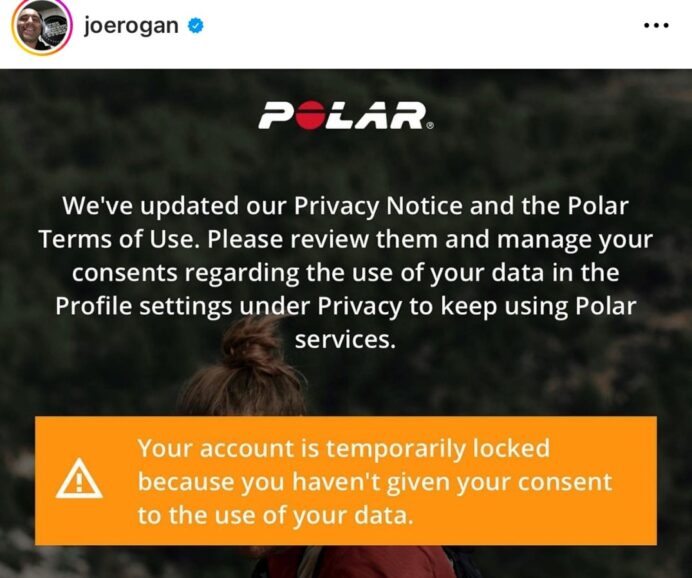
Recent events involving famous podcaster and comedian Joe Rogan and fitness device company Polar are a lesson in the delicate balancing act businesses face between privacy compliance and a positive user experience.

Joe Rogan screengrab of Polar Private Notice and Temporary Account Lock

A Backdrop of New Privacy Norms

Considering new and stringent privacy regulations, companies are

Most modern U.S. state data privacy laws exempt from their definition of personal information “publicly available information.” What constitutes publicly available information differs between state privacy laws and may not correlate to the lay definition understood by many businesses and individuals. For example, while some businesses may consider information that is available on the internet

Most modern U.S. data privacy statutes require companies to allow data subjects to opt out of having their personal information (PI) used for targeted advertising. As the following chart indicates, the term “targeted advertising” is defined consistently between and among most state statutes with the notable exception of the California Consumer Privacy Act (CCPA) and

The term “targeted advertising” is defined relatively consistently between and among modern U.S. data privacy statutes with the notable exception of California which deviates somewhat in the California Privacy Rights Act’s (CPRA) definition of the similar term “cross-context behavioral advertising” by omitting any reference to tracking a person over time or making predictions about a